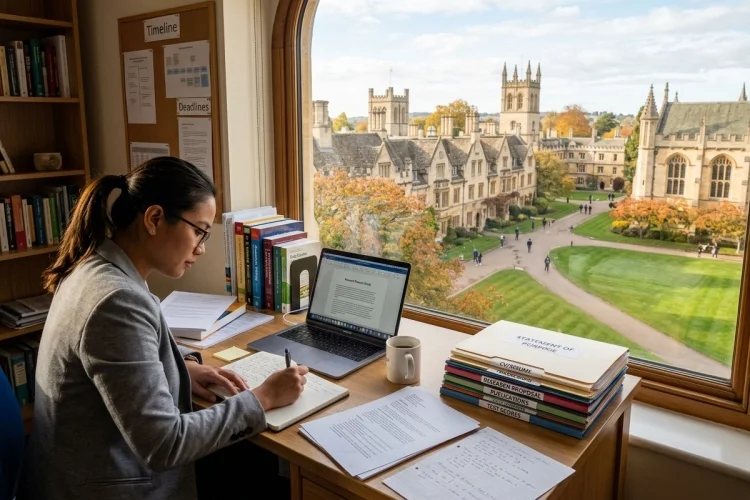
Applying for a doctorate can feel like assembling a complicated puzzle. One university asks for a research proposal, another wants a statement of purpose, and a third may require writing samples, test scores, or contact with a potential supervisor.
The good news is that most applications share several core elements. Once you understand the most common doctoral admission requirements, preparing your materials becomes much more manageable.
Doctoral admissions committees are not simply looking for applicants with perfect grades.
They want evidence that you are academically prepared, genuinely interested in the subject, capable of completing independent research, and well matched with the department. Requirements still vary between countries, universities, and individual programs.
EducationUSA notes that graduate applicants may face both institution-wide and department-specific requirements, while Princeton explains that its departments can request additional materials beyond the general graduate application.
This guide explains the documents, qualifications, tests, and practical steps you are most likely to encounter when applying for a PhD or another doctoral degree.
1. A Relevant Undergraduate or Master’s Degree
The first requirement is usually an appropriate academic qualification. Most doctoral applicants must have completed at least a bachelor’s degree or an internationally equivalent credential.
MIT, for example, states that applicants seeking regular graduate admission must have a bachelor’s degree or its equivalent from an institution of acceptable standing. However, individual departments determine their own academic expectations.
Whether you also need a master’s degree depends on the education system and program.
Many U.S. PhD programs accept students directly after undergraduate study, with master’s-level training built into the doctorate. In other countries, completing a relevant master’s degree may be expected or strongly preferred.
Your previous degree does not always have to carry exactly the same title as the doctorate. A student applying for environmental policy, for instance, might come from economics, geography, political science, or environmental studies.
What matters is whether your previous education has prepared you for the program’s methods, theories, and academic workload.
2. Academic Transcripts and Grade Requirements
Universities usually ask for transcripts from every college or university you have attended. These documents show your courses, grades, academic progress, and completed qualifications.
Many institutions initially accept uploaded, unofficial copies. Princeton currently requires applicants to upload unofficial transcripts from institutions they attend or previously attended. Documents that are not in English must be submitted with an official English translation.
You may later need to provide official copies after receiving an offer. Universities can withdraw admission when official records do not match the documents included in the application.
Some doctoral programs publish a minimum GPA or degree classification. Others use a more flexible review process and consider research experience, academic improvement, publications, professional achievements, and the difficulty of previous coursework.
A weaker grade in one semester does not necessarily end your chances. However, you may need to explain unusual circumstances briefly and show stronger evidence of research readiness elsewhere in the application.
3. A Statement of Purpose or Personal Statement
The statement of purpose is one of the most important parts of a doctoral application. It explains your academic background, research interests, reasons for applying, and long-term goals.
This document should not simply repeat your CV. Admissions committees want to understand how your previous experiences led you to this subject and why the specific department fits your plans.
EducationUSA describes the personal statement as an opportunity to show the admissions committee who you are beyond the factual information contained in other application materials.
A strong statement normally answers several questions: What do you want to study? What experience has prepared you? Why are you applying to this program? Which faculty members or research groups match your interests?
Be specific. Instead of writing, “This university is internationally respected,” explain how a particular laboratory, archive, methodology, or professor’s work would support your proposed research.
4. A Research Proposal
Research-focused doctorates often require a proposal, especially when applicants are expected to begin an independent project shortly after enrolling.
A doctoral research proposal usually introduces the topic, identifies a research problem, summarizes relevant literature, presents possible research questions, and explains the methods you may use. It should also demonstrate that the project is meaningful and realistic.
Oxford advises applicants to explain what they need to carry out the proposed research and how the university’s facilities and academic community would support it.
The proposal is not a permanent contract. Your research question, theoretical framework, or methodology may change after discussions with supervisors.
The admissions team mainly wants to see whether you can identify a worthwhile problem, engage with academic literature, think critically, and design a manageable investigation.
Always follow the program’s instructions. Word limits, formatting rules, and expected sections can differ significantly between departments.
5. Letters of Recommendation
Most PhD application requirements include two or three recommendation letters. These should normally come from people who can discuss your academic ability, research potential, work habits, and readiness for advanced study.
The most useful recommender is not always the person with the most impressive job title. A professor who supervised your thesis and knows your work well can usually write a stronger letter than a famous academic who barely remembers you.
Universities take these letters seriously. Princeton states that recommendation letters and the academic statement of purpose receive significant consideration during its admissions process.
Ask recommenders early, ideally several weeks before the deadline. Give them your CV, draft statement, research interests, program information, and submission date.
You should also explain why you are applying. This helps the writer connect specific examples of your abilities with the qualities the doctoral program values.
6. An Academic CV and Additional Work Samples
Some universities ask for an academic CV or résumé. It may include your education, research projects, thesis, publications, conference presentations, awards, teaching, employment, technical skills, and relevant volunteer work.
Not every program requires one. Oxford, for example, tells applicants to upload a CV only when the relevant course page specifically requests it.
Programs may also request a writing sample, portfolio, published paper, coding sample, or evidence of professional practice. Humanities applicants might submit an academic essay, while applicants in architecture, design, music, or the creative arts may need a portfolio.
Choose work that demonstrates the skills required by the doctorate. A well-structured research paper is usually more useful than a document that sounds impressive but does not show your own analysis.
Make your contribution clear when submitting collaborative work. Admissions reviewers need to understand which parts you completed.
7. English Proficiency and Standardized Tests
Applicants whose previous education was not conducted in English may need to submit an approved language test. Common options include IELTS, TOEFL, and, at some institutions, other recognized examinations.
Policies vary. MIT says that nearly all international graduate applicants must provide English-proficiency test scores, although exemptions may be available under specific conditions. Individual departments can also set requirements above the university’s recommended minimums.
Do not assume that studying some courses in English automatically gives you an exemption. Check the exact rules for your program, accepted tests, minimum scores, validity periods, and score-reporting procedures.
Academic standardized tests such as the GRE are less predictable. EducationUSA explains that universities establish their own testing policies, so applicants must check each institution separately.
Some departments require a test, some make it optional, and others do not accept it. For example, MIT Chemical Engineering currently states that GRE scores are neither required nor accepted for its PhD and MSCEP applications.
8. Research Fit, Supervisor Availability, and Interviews
Strong documents are not enough when the department cannot support your research. Doctoral admissions also depend on faculty expertise, supervisor availability, facilities, funding, and the number of places available.
Some programs expect applicants to contact a potential supervisor before applying. Others discourage direct contact or assign supervisors only after admission.
Read the application instructions carefully instead of following generic advice. Mentioning a professor in your statement is helpful only when you genuinely understand how their current research relates to your interests.
You may also be invited to an interview. Typical questions cover your research ideas, academic preparation, methodology, motivation, and reasons for selecting the department.
Treat the interview as a two-way conversation. Ask about supervision frequency, research culture, funding, teaching duties, program milestones, and career support. Before submitting anything, create a spreadsheet for every university.
Record its deadline, documents, word limits, referees, test requirements, application fee, supervisor rules, and funding process. This simple system can prevent an excellent application from being rejected because one small item was missing.
The most common doctoral admission requirements include a relevant degree, academic transcripts, a statement of purpose, recommendation letters, and evidence that your interests fit the program.
Depending on the discipline, you may also need a research proposal, CV, writing sample, portfolio, language test, standardized exam, or interview.
Requirements are never completely universal, so the official program page should always be your main guide. Start preparing early, tailor every application, and give your referees enough time to write detailed letters.
Your next step is to create a shortlist of doctoral programs and build a requirement tracker for each one. Careful preparation will not guarantee admission, but it will help you submit a complete, focused, and convincing application.